You’ve just completed another successful project. Your customer is thrilled, compliments your work, and promises to recommend you to friends. But days pass, and no Google review appears. This happens constantly across businesses. The challenge isn’t delivering great service; it’s converting satisfied customers into public advocates. Research shows that 93% of consumers read online reviews before making a purchase, making your Google rating a critical business asset.
Learning how to get 5-star Google reviews ethically, without prohibited review gating, transforms happy customers into powerful marketing assets. This comprehensive guide walks you through building a compliant review funnel that consistently generates authentic positive feedback while respecting both Google’s strict policies and your customers’ genuine experiences.
How to get 5-star reviews without review gating: The complete process
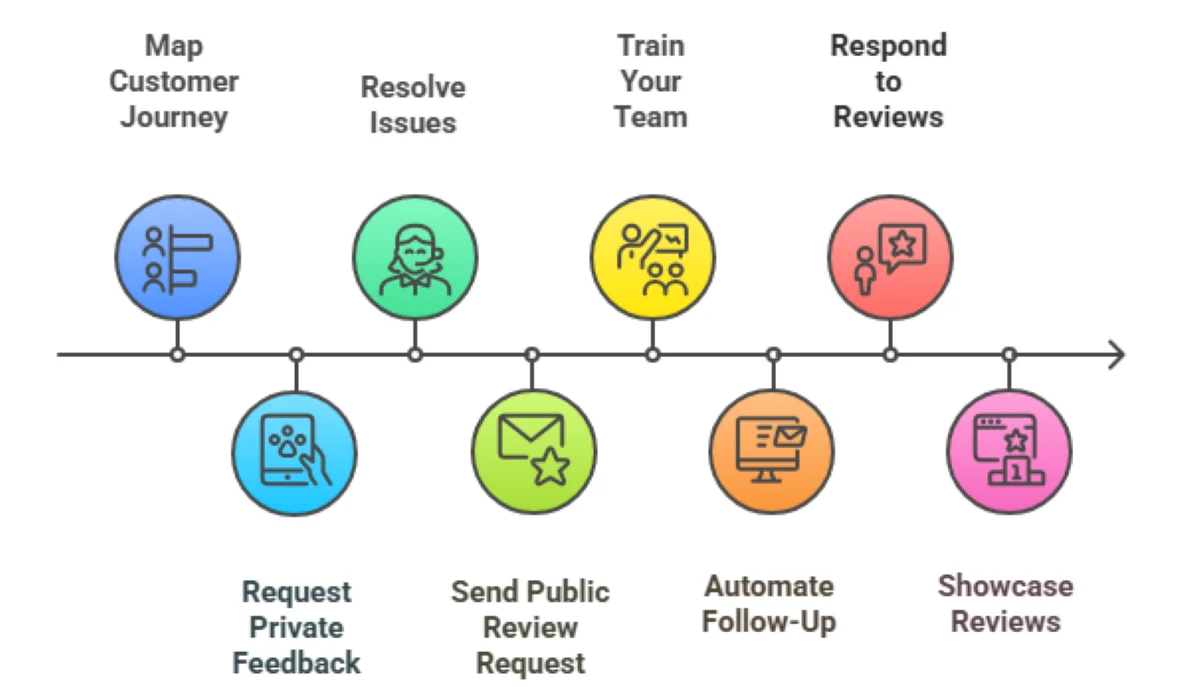
Building a reliable stream of authentic 5-star reviews requires implementing a systematic, ethical approach that treats every customer fairly while strategically maximizing opportunities for positive feedback. This complete eight-step process ensures compliance with Google’s anti-gating policies while optimizing your review collection timing, messaging, and follow-up strategies for maximum effectiveness.
Step 1: Map customer journey & good moments
Before requesting reviews, identify precise moments when customers experience peak satisfaction with your products or services. Strategic touchpoints create natural opportunities for review requests that feel earned rather than forced.
Identify post-purchase satisfaction peaks
Capture customers immediately after successful delivery completion, installation finish, or problem resolution when positive emotions run highest and memories stay vivid.
Document service completion milestones
Track precisely when projects finish, products arrive safely, or promised results get delivered, as these represent natural endpoints for complete experience evaluation.
Find unexpected delight triggers
Look for moments when you exceed expectations through faster shipping, bonus services, personalized touches, or extra value, creating the strongest emotional responses and enthusiastic reviews.
Map customer communication touchpoints
Review every email, text, phone call, or in-person interaction to spot opportunities where customers naturally express satisfaction or enthusiasm, indicating readiness for review requests.
Analyze the timing between service and satisfaction
Study when customers typically recognize full value from your offerings, some appreciate benefits immediately, while others need days or weeks to experience complete results.
Step 2: Request private feedback first
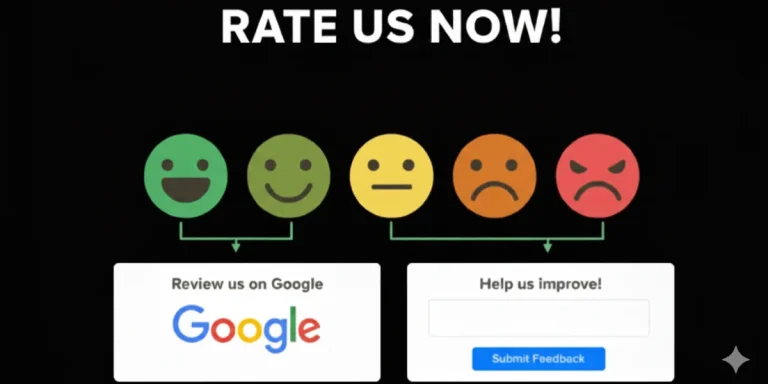
Before asking for public Google reviews, gather internal feedback through private satisfaction surveys to gauge sentiment and identify potential issues. This two-step approach prevents negative public reviews while maintaining Google policy compliance.
Send satisfaction surveys immediately
Deploy brief, neutral customer satisfaction surveys within 24 hours of service completion, asking customers to rate their experience privately using simple numerical or emoji-based systems.
Ask open-ended quality questions:
Include specific questions like “What could we have done better?” to surface concerns and delights before they become public, providing valuable business intelligence privately.
Identify promoters versus detractors
Use survey responses to segment customers. Promoters rating 9-10 get immediate review requests, detractors rating 0-6 trigger customer service outreach for prompt issue resolution.
Resolve issues before review requests
Contact unhappy customers directly, acknowledge concerns sincerely, fix problems completely, then invite public reviews, transforming detractors into advocates through excellent service recovery and responsiveness.
Keep private feedback completely separate:
Never condition public review requests on private satisfaction ratings. Everyone receives internal surveys first, then everyone receives public review invitations afterward, regardless of their scores.
Step 3: Send neutral public review request (to everyone)
After collecting private feedback and addressing identified issues, send review invitations to all customers regardless of internal satisfaction scores. This universal approach maintains strict Google anti-gating policy compliance while benefiting from strategic timing.
Use neutral, non-pressuring language
Frame requests as invitations: “We’d appreciate your honest feedback” instead of “If you loved our service.” Neutral language avoids suggesting that only positive reviews matter and increases response rates.
Include direct Google Business Profile links
Provide exact “Write a review” URLs from your Google Business dashboard rather than search result pages. Direct links reduce clicks from 8-10 down to 2-3, dramatically increasing completion.
Optimize for mobile experience
Ensure review links open directly in the Google Maps mobile app or browser for seamless one-tap access, since most reviews happen on smartphones rather than desktop computers.
Add QR codes for in-person requests
Print QR codes on receipts, invoices, table tents, or packaging that instantly take customers to your review page without typing, perfect for face-to-face satisfaction moments.
Time requests are strategically made across channels
Send email requests within 48 hours for considered purchases, SMS within 24 hours for quick transactions, and make in-person asks during peak satisfaction moments while engaged.
Step 4: Train your team
Front-line employees create memorable experiences that earn genuine 5-star reviews and make natural review requests feel personal rather than transactional or scripted. Comprehensive team training ensures consistency, confidence, and dramatically higher completion rates.
Teach natural conversation techniques
Train staff to mention reviews conversationally. “Many customers tell us about their experience on Google,” rather than reading stiff scripts that feel like corporate marketing pitches.
Role-play customer interaction scenarios
Practice review requests through mock conversations covering enthusiastic customers, neutral responses, hesitant individuals, and hostile reactions to build confidence in handling all possible situations comfortably.
Empower staff to resolve issues first
Give front-line employees genuine authority to fix problems immediately through refunds, replacements, or discounts without manager approval, ensuring most experiences end positively and deserve requests.
Create incentive structures carefully
Reward teams for total reviews received, regardless of star ratings, not positive ratings specifically, avoiding any hint of gating while motivating consistent solicitation through team-based incentives.
Share review impact on business
Show staff regularly how positive reviews directly affect website traffic, booking rates, sales conversion, and job security through real data demonstrating that reviews fund their paychecks.

Step 5: Automate follow-up reminders
Most customers genuinely intend to leave reviews after promising, but simply forget without gentle reminders. Strategic automation keeps requests top-of-mind without creating spam, striking the delicate balance between effective persistence and respectful restraint.
Send the first reminder after 3-4 days
If customers haven’t reviewed within 3-4 days of initial request, trigger polite automated reminders explaining that their feedback helps others make informed decisions about your business.
Limit total reminders to a maximum of two
One initial request plus one follow-up reminder strikes an optimal balance. More than two messages cross into harassment territory and risk damaging relationships while generating diminishing returns.
Personalize automated messages meaningfully
Include specific details about their purchase date, service type, or staff member who helped them, so automated reminders feel personal despite being systematically triggered messages.
Space reminders appropriately apart
Wait at least 3-4 days between initial request and reminder, giving customers adequate time to respond without feeling pressured, overwhelmed, or nagged by excessive communication frequency.
Automatically stop after review submission
Immediately remove customers from reminder sequences once they leave reviews to avoid sending additional requests that damage goodwill and make you look disorganized or careless.
Step 6: Respond quickly to every review
Research shows 53% of customers expect businesses to respond to negative reviews within one week, but fast, thoughtful responses to all reviews demonstrate engagement, encourage more feedback, and significantly impact how potential customers perceive your business.
Set 24-48 hour response targets
Reply to every single review within two days maximum. Speed demonstrates attentiveness and encourages more customers to leave reviews when they see consistent engagement from management.
Personalize every response uniquely
Avoid generic “Thanks for your review” templates by mentioning specific details from each review, showing you actually read and value individual feedback rather than sending robotic responses.
Thank positive reviewers specifically
Acknowledge precisely what customers praised. “We’re glad our quick installation worked for your tight schedule,” reinforcing positive behaviors and building deeper relationships beyond the transaction itself.
Address negative reviews constructively
Apologize sincerely for shortcomings, explain what happened without excuses, describe specific fixes implemented to prevent recurrence, and invite offline resolution conversations demonstrating commitment to improvement.
Never ask for review changes
Responding professionally to all criticism shows integrity, but requesting review edits, removal, or reconsideration appears manipulative and violates Google’s policies about authentic feedback and genuine customer experiences.
Step 7: Showcase reviews strategically
Displaying positive reviews prominently across marketing channels creates powerful social proof that builds trust and generates additional reviews through a virtuous cycle. Strategic showcasing amplifies every review’s value by exposing it to multiple audiences.
Embed reviews on website pages
Place review widgets strategically on landing pages, service descriptions, pricing pages, and checkout flows where prospects need reassurance most during their decision-making and conversion process.
Share reviews on social media
Post screenshots featuring 5-star reviews to Facebook, Instagram, LinkedIn, and Twitter with customer permission, expanding reach beyond Google’s platform to broader audiences and followers.
Include testimonials in email signatures
Add rotating review snippets to all team member email signatures so every customer interaction subtly reinforces your positive reputation with authentic third-party validation automatically and passively.
Feature reviews in sales materials
Incorporate specific customer quotes strategically into proposals, presentations, brochures, and case studies, providing social proof during sales conversations with skeptical prospects researching your credibility.
Create video testimonial compilations
Ask permission from enthusiastic reviewers to interview them on camera about their experience. Video testimonials carry more emotional weight and authenticity than text alone ever could.
Step 8: Monitor, analyze, and improve
Treat reviews as valuable business intelligence, revealing patterns about operations, highlighting improvement opportunities, and guiding strategic decisions beyond just maintaining your public star rating. Systematic analysis uncovers insights that internal metrics miss completely.
Track review volume trends:
Monitor how many reviews you receive weekly or monthly, ensuring your funnel maintains consistent momentum rather than sporadic, unpredictable bursts followed by frustrating dry periods.
Analyze rating distribution patterns:
Study a detailed breakdown of 5-star versus 4-star versus 3-star versus negative reviews, identifying whether service quality stays consistent over time or varies seasonally or by location.
Identify recurring feedback themes:
Look systematically for common praise or complaints appearing across multiple reviews. Patterns reveal true strengths and weaknesses more reliably than individual opinions reflecting unique circumstances.
Measure conversion rate improvements:
Track precisely how increasing review volume and average ratings affect website traffic sources, lead generation rates, and sales conversion percentages, quantifying actual business impact and ROI.
Use feedback for operational changes:
Implement concrete improvements based on recurring complaints or suggestions, then communicate specific fixes prominently in review responses, showing current and future customers that feedback drives real change.
What actually earns 5-star reviews?
Before asking for reviews or implementing any collection funnel, deliver experiences genuinely worth celebrating and sharing with others. Sophisticated review funnels amplify great service and make it visible. They cannot create positive feedback from mediocre experiences or compensate for poor service quality.
Deliver exceptional product quality
Your core product or service must solve customer problems completely, reliably, and better than available alternatives, providing genuine value that customers recognize and appreciate. Quality forms the non-negotiable foundation because everything else simply communicates that quality to more people more effectively across different channels and platforms.
Make everything easy to use
Customers reward simplicity, convenience, and frictionless experiences throughout their entire journey with your business from initial discovery through final delivery and support. Reduce hassle at every touchpoint, like easy online ordering, clear instructions, intuitive interfaces, simple returns, and responsive support, because hassle-free experiences naturally generate positive sentiment and willingness to recommend publicly.
Leave customers better off
The most enthusiastic reviews come when customers clearly recognize that their lives have improved significantly after working with you, rather than just receiving a satisfactory transaction. Whether solving painful problems, creating new opportunities, saving time, reducing stress, or achieving essential goals, genuine transformation drives enthusiasm rather than mere satisfaction or neutral completion.
Build personal relationships
Research consistently shows customers leave raving reviews for people they care about, not necessarily brands. Your team’s likability, authentic friendliness, deep knowledge, and genuine helpfulness during interactions create emotional connections that inspire reviews and advocacy. Invest heavily in hiring naturally warm people and training relationship-building skills authentically.
Exceed expectations consistently
Strategic surprises delight customers and create memorable experiences worth sharing publicly—faster delivery than promised, bonus value included, personalized touches added, or unexpected thoughtfulness demonstrated. These positive surprises create excitement and gratitude that make people want to tell others publicly about their experience, transforming satisfied customers into enthusiastic advocates voluntarily.
The core principles of compliant review funnels
Ethical review collection requires following specific guardrails that keep you compliant with Google’s strict policies while still optimizing results through strategic timing and messaging. These fundamental principles ensure your funnel builds an authentic reputation consistently without risking review removal or account suspension.
Ask every customer without exception
Request reviews from absolutely all customers regardless of satisfaction indicators, feedback scores, or any other factors suggesting likely ratings to avoid prohibited gating. Pre-screening customers and selectively asking only satisfied ones violates Google’s fundamental anti-gating policies explicitly and can result in serious penalties, including complete account suspension.
Use the two-step feedback process
Collect private satisfaction ratings through internal surveys first, then send public review requests to everyone regardless of private scores, and afterward maintain strict compliance. This two-step approach lets you identify issues and resolve them proactively before they become public complaints without engaging in prohibited selective solicitation practices.
Keep language neutral and optional
Frame all review requests as invitations rather than obligations or demands, using phrases like “We’d appreciate your honest feedback” rather than “Leave us a 5-star review if happy.” Neutral language prevents even subtle pressure toward positive reviews, maintains strict policy compliance, and actually increases response rates because customers don’t feel manipulated.
Time requests during satisfaction peaks
Ask for reviews soon after positive experiences while emotions stay fresh, memories remain vivid, and enthusiasm hasn’t faded into indifference or forgetfulness through time passage. Prompt requests capture genuine excitement before it dissipates naturally, increasing both response rates and rating positivity through natural psychological timing rather than manipulation or pressure tactics.
Avoid conditional incentives
Never offer rewards, discounts, or gifts exclusively for positive reviews or high ratings, specifically as this constitutes prohibited review manipulation under consumer protection regulations. If you choose to provide incentives at all, offer them equally for any honest revie, regardless of rating, ensure clear disclosure, and verify your platform allows it.
How Spreadical helps with automating customer reviews
Spreadical provides comprehensive review automation tools that streamline the compliant review collection process from request to response. The platform’s intelligent features help you implement the two-step feedback approach while maintaining strict Google policy compliance throughout your entire review funnel.
Automated review request workflows
Spreadical automates review request sequences, sending initial requests and follow-up reminders to all customers at optimal times without manual effort, maintaining strict anti-gating compliance while you focus on service quality.
Real-time Google review monitoring via WhatsApp
Every new Google review instantly syncs to your WhatsApp, eliminating constant manual checking. Real-time notifications ensure you maintain 24-48 hour response targets that demonstrate engagement and encourage more customer feedback.
AI-powered response drafts for faster engagement
Spreadical generates intelligent response drafts using AI that match your brand tone and address customer sentiment appropriately, accelerating your reply process while maintaining personalization through custom variables and specific details.
WhatsApp-based review response management
Approve, edit, or auto-publish review responses directly through WhatsApp without switching platforms or logging into separate dashboards, streamlining workflow and reducing time investment required for consistent review engagement daily.
Centralized Google review dashboard integration
Manage all Google Business Profile locations from one unified dashboard, tracking review volume, rating distributions, response times, and team performance, providing the intelligence needed to optimize your review funnel continuously.
Frequently asked questions
Is it illegal or against Google policy to only ask happy customers for reviews?
Yes, this violates Google’s anti-gating policies and can result in review removal or account suspension. Use two-step feedback instead: survey everyone privately, then request public reviews from all customers.
How soon should I ask for a review after a purchase or service?
Request reviews within 24-48 hours after service completion when experiences stay fresh and positive emotions remain strong before fading into indifference or forgetfulness through time passage.
Can I incentivize customers to leave reviews?
Only offer neutral incentives for any honest review, regardless of rating, never conditional on positive feedback. Many platforms, including Google, discourage all incentives to maintain review authenticity completely.
Will asking all customers, even unhappy ones, hurt my rating?
Not when using two-step feedback to resolve issues first. Research shows 4.5-4.8 average ratings appear more credible than perfect 5.0 ratings, which over 50% consider potentially fake.
How many reminders are OK before it becomes spammy or harmful?
Limit to two total messages maximum, one initial request plus one gentle reminder after 3-4 days. More than two crosses into harassment territory, damaging customer relationships permanently.
Does automation count as gating?
No, automation is compliant if your system sends review requests to all customers equally. Gating occurs only when filtering recipients based on satisfaction scores to exclude unhappy customers permanently.
What if I get a negative review? Should I respond or hide it?
Always respond professionally, never hide or ignore. Research shows 73% of unhappy customers give businesses a second chance if responses solve their problems effectively and sincerely.
What tools can help me manage reviews compliantly?
Platforms like Spreadical can help with Google review monitoring via WhatsApp, neutral templates, automatic reminder limits, multi-platform monitoring, and response dashboards, ensuring strict policy compliance throughout processes.